

🦠 Unit-10: Diseases and Immunity
Cambridge IGCSE Biology (0610)
🦠 Topic Area: Human Biology
⏱️ Estimated Reading Time: 30-35 minutes
🎯 Difficulty Level: ★★★★☆
📖 Last Updated: September 2026
Understand how diseases are caused and transmitted, how the human body defends itself against pathogens, how immunity develops, and how disease can be controlled and prevented.
🎯 Learning Objectives
By the end of this unit, you should be able to:
- 1. Define pathogens and transmissible diseases.
- 2. Describe how pathogens are transmitted.
- 3. Describe the body’s defenses against disease.
- 4. Explain the role of antigens and antibodies.
- 5. Describe active and passive immunity.
- 6. Explain the role of vaccination in preventing diseases.
- 7. Explain how diseases can be controlled and prevented.
📋 Syllabus Inclusion
Tick each point when you feel confident that you have learned it.
- A disease is a condition in which the normal functioning of the body is affected, often resulting in signs (observable or measurable changes that can be detected by another person, such as a doctor. E.g. fever, rash, swelling, high blood pressure) and symptoms (changes or feelings experienced and reported by the patient. E.g. headache, pain, nausea, tiredness).
- Diseases can be basically categorized into two main types:
- Transmissible disease or Infectious disease or Communicable diseases
- Non-transmissible disease or Non-infectious disease or Non-communicable disease
- A transmissible disease is always caused due to a pathogen, which can be passed from the infected person to the healthy person. Pathogens are disease causing organisms, which enter the body and reproduce or produce harmful substances (toxins) which affect the normal functioning of the body. For eg., bacteria, virus, fungi, or protoctists.
- A non-transmissible disease is not caused by pathogens and cannot be passed from one host to another. It generally develops due to certain conditions or changes in the body, genetic factors, lifestyle factors or environmental factors that affect the normal functioning of the body. For eg., persistently high blood glucose levels are associated with diabetes, while obesity and high blood cholesterol can increase the risk of coronary heart disease.
- The terms infection and disease are related, but they are not exactly the same. An infection occurs when a pathogen enters the body and begins to reproduce or multiply. For e.g., bacteria entering the body and multiplying is a bacterial infection.
1.1. Pathogen:
- A pathogen may cause disease by damaging cells, tissues or organs, or by producing harmful substances such as toxins. Understanding pathogens and the ways in which they are transmitted is important because it helps us understand how diseases spread and how their spread can be prevented. In short, pathogens are disease causing organisms.
- Many different types of organisms can act as pathogens. In humans, the major groups of pathogens include: Bacteria, Viruses, Fungi, Protists, Worms.
1.2. Methods of transmission:
- The method by which the pathogen moves from one person to another is called its method of transmission.
- For e.g.: Infected person → pathogen → uninfected person
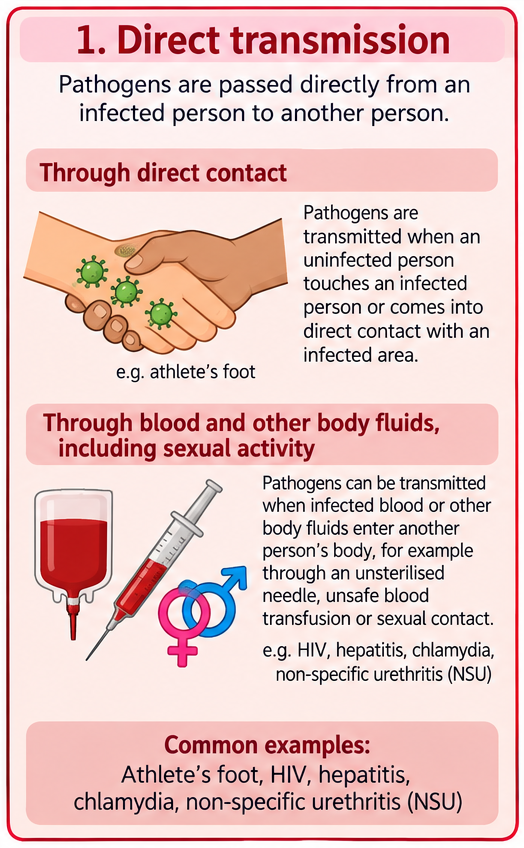
- Through direct transmission
- A pathogen is transmitted directly from an infected person to another person without an intermediate object, food, water or animal.
- This may occur:
- Through direct contact
- Pathogens pass when an uninfected person touches an infected person or comes into direct contact with an infected area.
- Example: athlete’s foot.
- Through direct contact
- Through blood and other body fluids
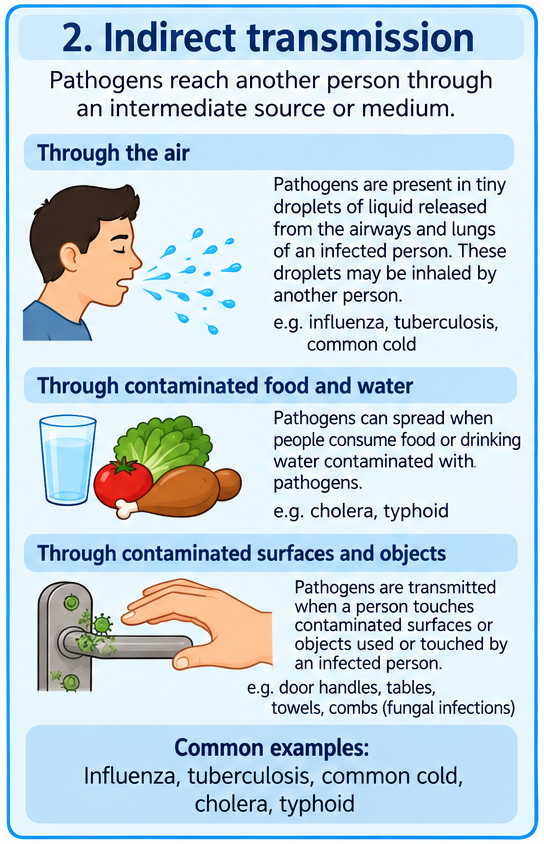
- Through indirect transmission
- A pathogen reaches another person through an intermediate source or medium rather than by direct contact.
- This may occur:
- Through the air:
- Pathogens may be present in tiny droplets of liquid released from the airways and lungs of an infected person during coughing or sneezing.
- These droplets may be inhaled by another person.
- Examples: influenza, tuberculosis,common cold.
- Through contaminated food and water
- Pathogens can spread when people consume food or drinking water contaminated with pathogens.
- Contamination may occur through poor hand hygiene, improperly cooked food, human faeces contaminating water supplies or flies transferring pathogens to food.
- Examples: cholera, typhoid.
- Through contaminated surfaces and objects
- Pathogens may be transmitted when a person touches contaminated surfaces or objects used or touched by an infected person.
- Examples: towels, door handles, tables, chairs and combs.
- Through the air:
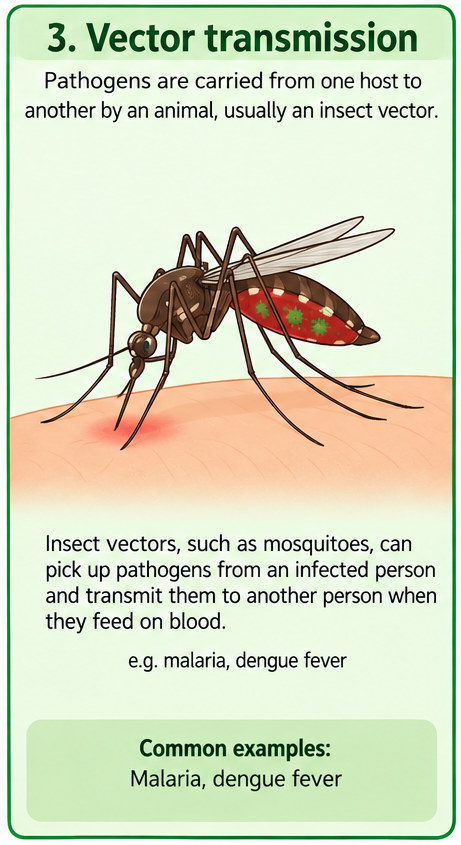
- Through vectors
- A vector is an animal that carries a pathogen from one host to another.
- Insects such as mosquitoes may feed on the blood of an infected person and then transmit the pathogen when they feed on an uninfected person.
- Examples: malaria and dengue fever, transmitted by mosquitoes.
- A vector is an animal that carries a pathogen from one host to another.
- The human body is continuously exposed to microorganisms that may cause disease. These disease-causing organisms are called pathogens. The body has several defense mechanisms that prevent pathogens from entering the body or destroy them if they enter.
- There are three lines of defence:
- First line of defence – mechanical and chemical barriers
- Second line of defence – cellular defence by phagocytes
- Third line of defence – specific defence by lymphocytes
2.1 First Line of Defense – Mechanical and Chemical Barriers
- The first line of defense prevents pathogens from entering the body.
- These defenses are non-specific, meaning that they do not differentiate among or identify the pathogens and act against many different types of pathogens in the same common way.
- The first line consists mainly of mechanical barriers and chemical barriers
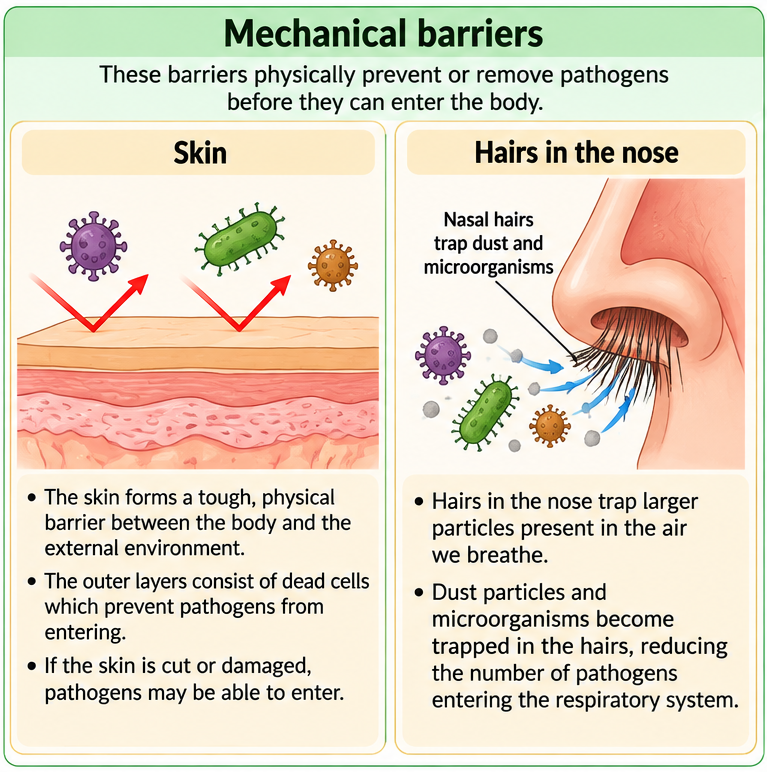
- A. Mechanical barriers
- Mechanical barriers physically prevent or remove pathogens before they can enter the body.
- Skin
- The skin forms an important physical barrier between the body and the external environment.
- The outer layers of the skin consist largely of dead cells.
- These layers form a protective barrier that prevents pathogens from entering the body.
- If the skin is damaged by a cut or wound, pathogens may be able to enter.
- Hairs in the nose
- The hairs in the nose trap larger particles present in the air we breathe.
- Dust particles and microorganisms can become trapped by the nasal hairs.
- This reduces the number of potentially harmful particles entering deeper into the respiratory system.
- Skin
- Mechanical barriers physically prevent or remove pathogens before they can enter the body.
- B. Chemical barriers
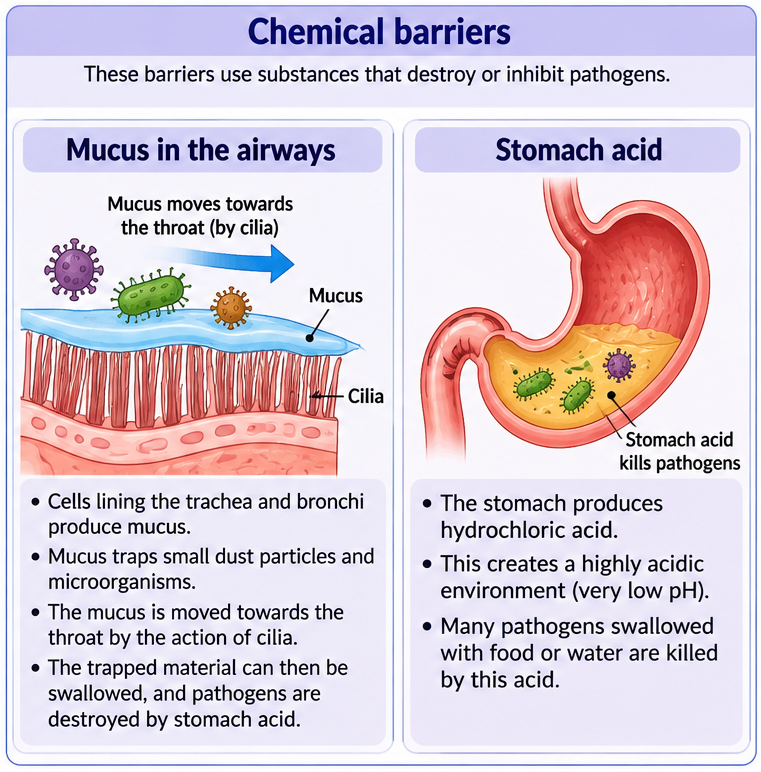
- Chemical barriers use substances that destroy or inhibit pathogens.
- Stomach acid
- The stomach produces hydrochloric acid.
- The acid creates a highly acidic environment in the stomach.
- Many pathogens swallowed with food or water are killed by this acid.
- Therefore, stomach acid provides protection against pathogens entering the body through the digestive system.
- Mucus in the airways
- The cells lining the trachea and bronchi produce mucus.
- Mucus traps small dust particles and microorganisms that enter the airways.
- The mucus is moved away from the lungs towards the throat by the action of cilia.
- The trapped material can then be swallowed.
- Pathogens that reach the stomach can subsequently be destroyed by stomach acid.
- Stomach acid
- Chemical barriers use substances that destroy or inhibit pathogens.
2.2 Second line of defence – Cellular defence by phagocytes
- If pathogens manage to get through the mechanical and chemical barriers and enter the blood or body tissues, the body has a second line of defense.
- The second line is provided mainly by phagocytes, which are a type of white blood cell.
- This defence is also non-specific because phagocytes can attack and destroy a wide range of different pathogens without differentiating the pathogens and acting in the same common way
- Phagocytes
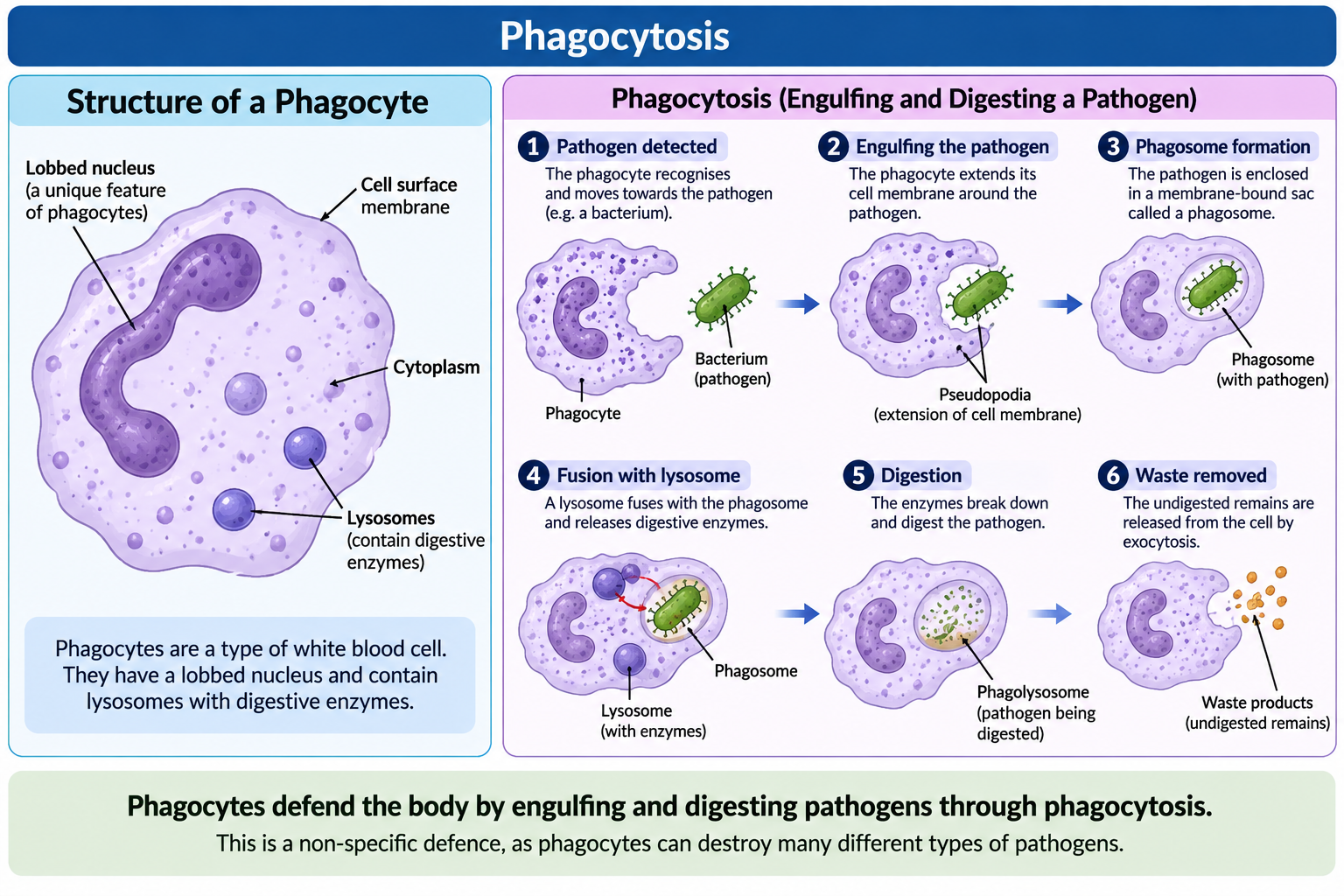
- Phagocytes defend the body by carrying out phagocytosis.
- The process can be described as follows:
- Pathogen enters the body → phagocyte recognises/encounters the pathogen → phagocyte surrounds and engulfs it → pathogen is enclosed inside the phagocyte → pathogen is digested and destroyed
- Phagocytes engulf pathogens into structures called vacuoles within the cell. Enzymes then digest and destroy the pathogens.
- Why is this defence non-specific?
- A phagocyte does not need to recognise a particular pathogen and produce a specific antibody against it.
- Instead, it can engulf and digest different types of pathogens.
- For example, phagocytes can engulf bacteria and viruses that have entered the blood or tissues.
2.3 Third line of defense – Specific defense by lymphocytes
- If pathogens get past the first two lines of defence, the body activates a specific immune response.
- The third line of defence is provided by lymphocytes, which are a type of white blood cell.
- Unlike the first two lines, this defence is highly specific.
- This means that lymphocytes respond to specific pathogens or specific antigens.
- Antigens
- Pathogens have specific proteins on their surfaces called antigens.
- Each type of pathogen has its own antigens.
- These antigens have specific shapes.
- Lymphocytes can recognise these specific antigens.
- In response, the appropriate lymphocytes produce specific antibodies.
- Antibodies
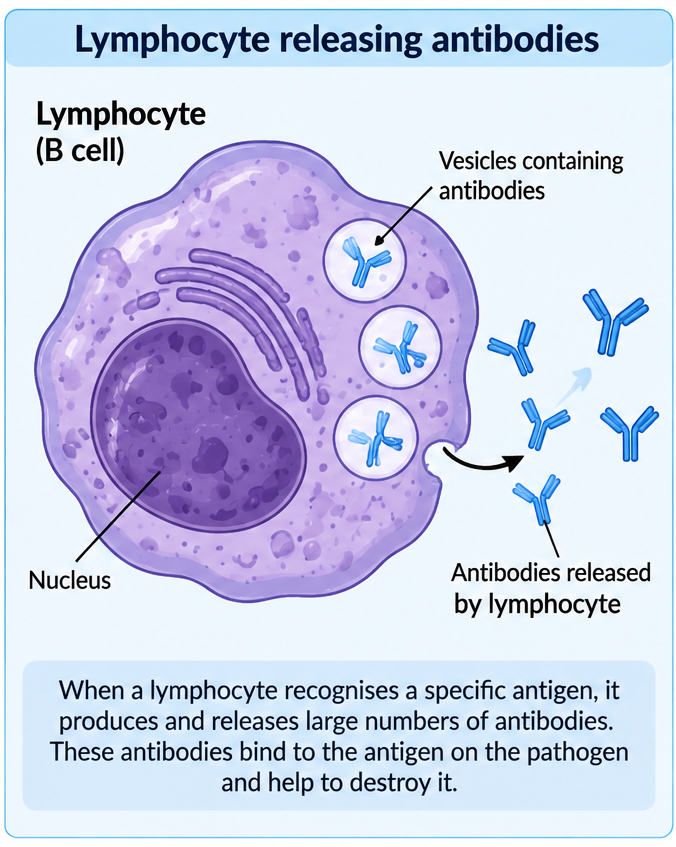
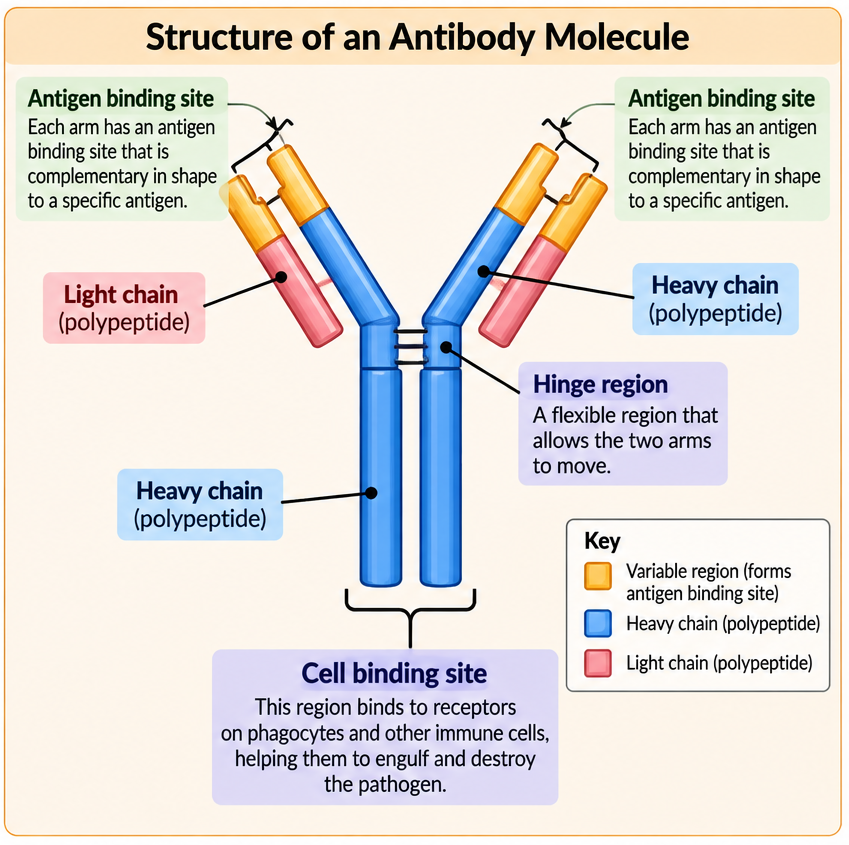
- Antibodies are proteins produced by lymphocytes.
- Each antibody has a particular shape that is complementary to the shape of a specific antigen.
- The specificity of the antibody to the antigen is because of the unique amino acid sequence in its antigen binding site.
- Therefore:
- Specific antigen → recognised by specific lymphocyte → specific antibodies produced → antibodies bind to the antigen
- Once antibodies bind to antigens on pathogens, they can help in their destruction. For example, antibodies may cause pathogens to stick together, making them easier for phagocytes to engulf and destroy.
Types of Lymphocytes:
- Lymphocytes are a type of white blood cell involved in the body’s specific immune response. They recognise specific foreign substances, particularly antigens, and help the body defend itself against pathogens.
- There are mainly two types of lymphocytes: B-Lymphocytes and T-Lymphocytes
- 1. B-lymphocytes
- B-lymphocytes are mainly involved in antibody-mediated immunity.
- When a B-lymphocyte recognises a specific antigen, it becomes activated and divides to form different types of cells:
- Plasma cells – produce and release large quantities of specific antibodies that bind to the antigen on the pathogen.
- Memory B cells – remain in the body and retain a memory of the specific antigen. They allow a faster and stronger immune response if the same pathogen enters the body again.
- In simple terms:
- B-lymphocytes → plasma cells → antibodies
- B-lymphocytes → memory B cells → long-term immune memory
- 2. T-lymphocytes
- T-lymphocytes are mainly involved in cell-mediated immunity. Rather than producing antibodies, they recognise specific antigens and help coordinate the immune response or destroy infected cells.
- The main types include:
- Helper T cells – activate and coordinate other immune cells, including B-lymphocytes and phagocytes.
- Cytotoxic T cells (killer T cells) – recognise and destroy infected or abnormal body cells.
- Regulatory T cells – help control and limit the immune response.
- Memory T cells – remain after an immune response and allow a faster response if the same antigen is encountered again.
- It is tempting to think of B-lymphocytes and T-lymphocytes as completely separate systems, but they actually work together.
- A simplified picture is:
- Pathogen enters body → Antigen recognised → T-helper cells help activate appropriate B-lymphocytes → B-lymphocytes divide → Plasma cells=antibodies & Memory B cells=long-term immune memory
- At the same time:
- T-lymphocytes → coordinate immune response / destroy infected cells / form memory T cells
The three lines of defence at a glance
| Line of defence | Main defence | Specific or non-specific? | Main function |
| First line | Skin, hairs in nose, mucus, stomach acid | Non-specific | Prevent pathogens entering the body |
| Second line | Phagocytes | Non-specific | Engulf, digest and destroy pathogens that enter the body |
| Third line | Lymphocytes, antibodies | Highly specific | Recognise specific antigens and produce specific antibodies to help destroy pathogens |
Immunity is the ability of the body to defend itself against a particular pathogen and prevent it from causing disease. The body’s immune response involves the recognition of specific antigens on pathogens and the production of specific antibodies.
There are two main types of immunity:
- Active immunity – the body produces its own antibodies following exposure to pathogen antigens, either through natural infection or artificial vaccination.
- Passive immunity – the body receives ready-made antibodies from another individual, rather than producing them itself; the pathogen itself does not need to be introduced.
Active and passive immunity can each be natural or artificial.
3.1. Active Immunity
- Active immunity is a defense against a pathogen in which the body’s own immune system produces specific antibodies against the pathogen.
- Active immunity develops when the immune system is exposed to the antigens of a pathogen.
- It can be acquired naturally or artificially.
Types of active immunity
| Type | How it is acquired | Example |
| Natural active immunity | A person becomes infected with a pathogen and develops an immune response | Immunity developed after recovering from an infection |
| Artificial active immunity | A person is given antigens through vaccination, stimulating an immune response | Vaccination against measles, polio, etc. |
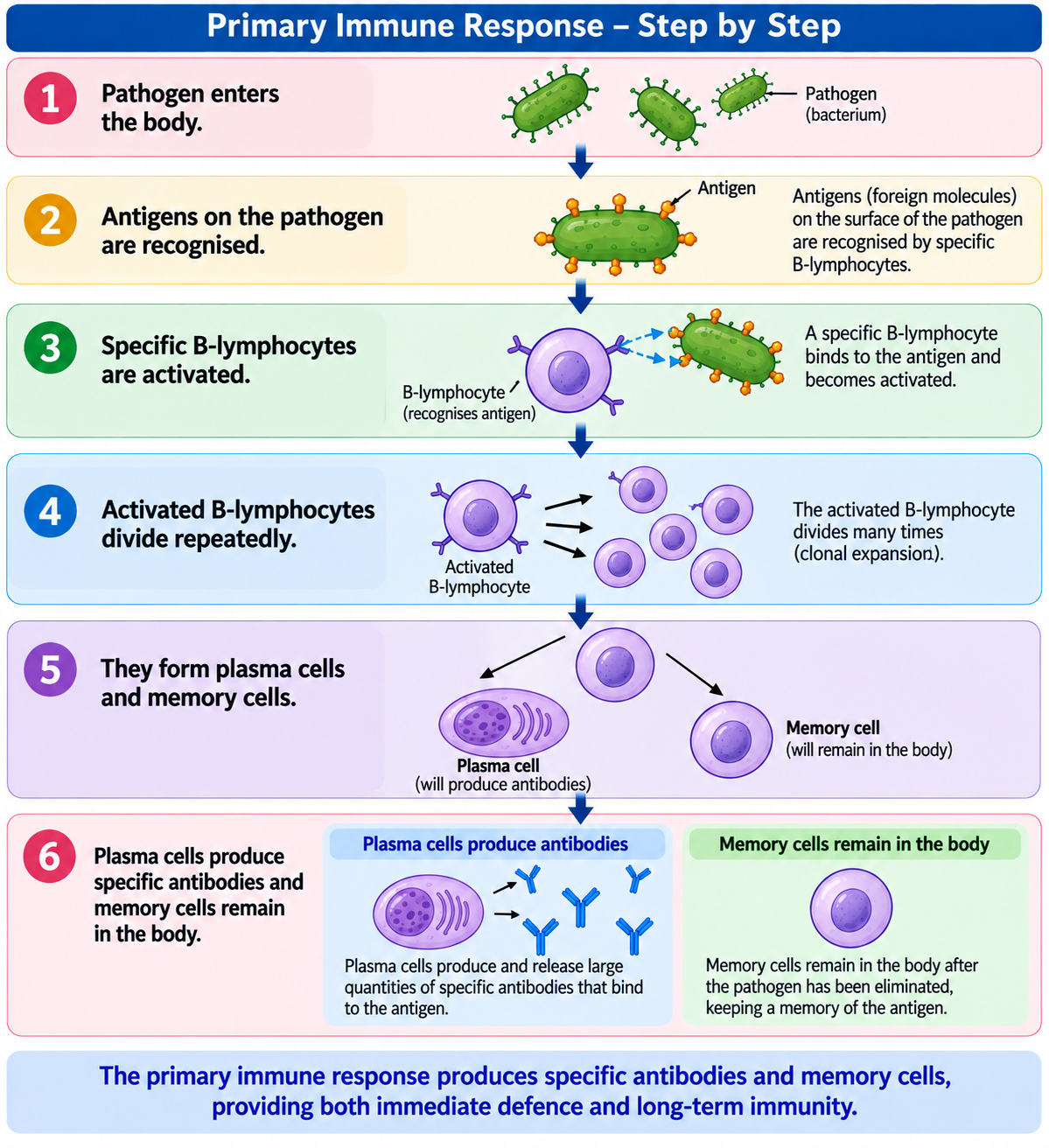
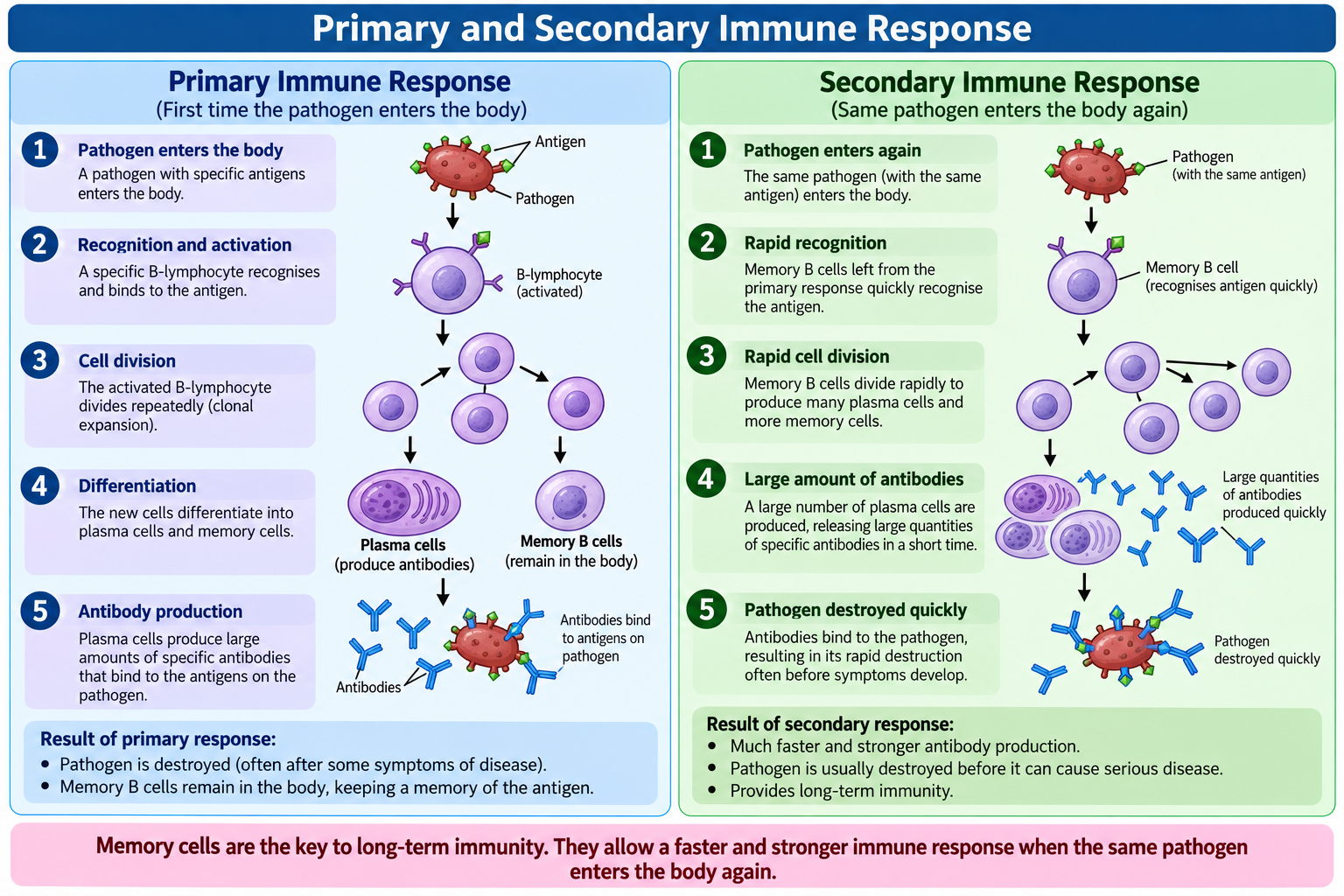
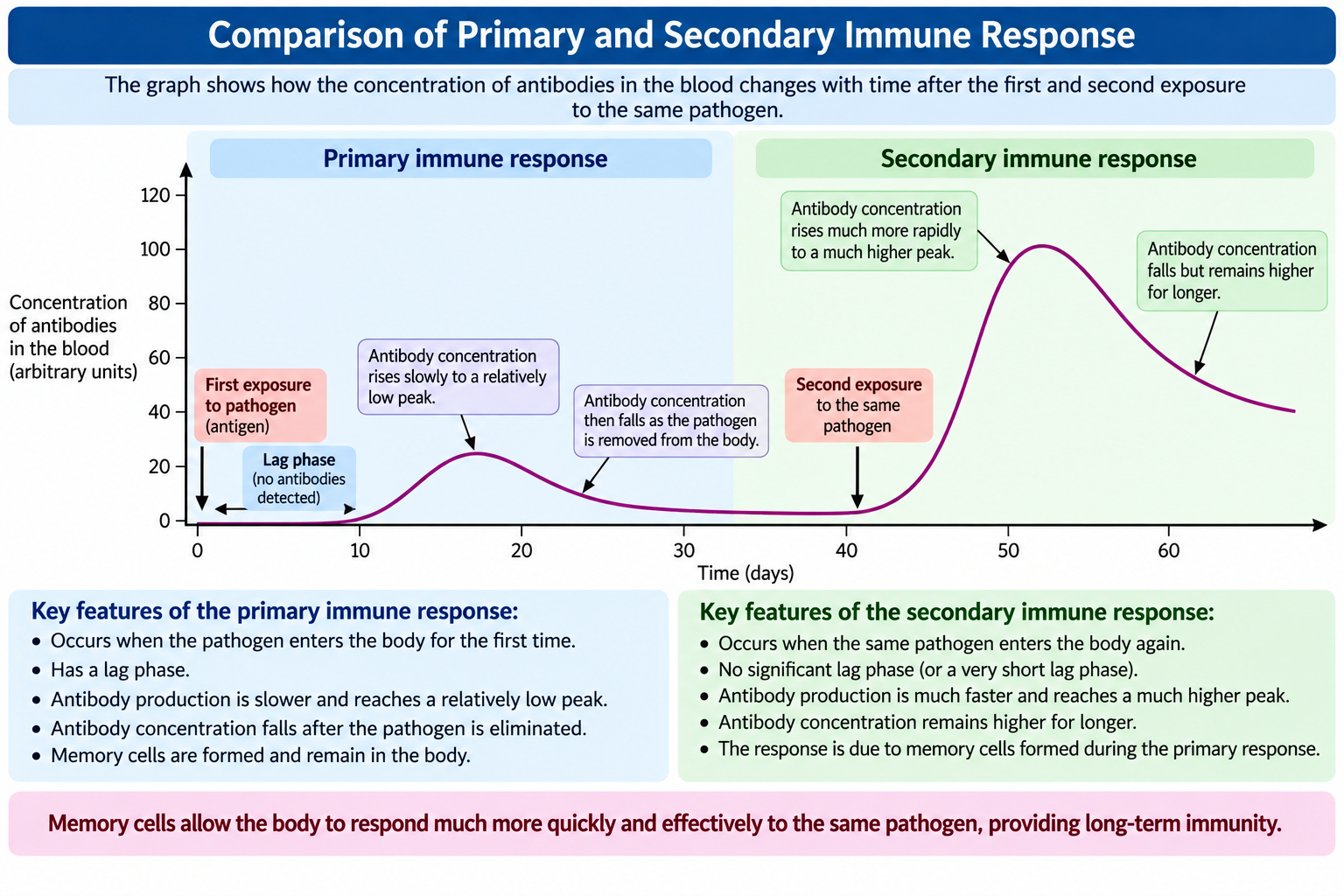
3.1.1. Primary Immune Response
The primary immune response occurs when the body encounters a particular pathogen or its antigen for the first time. The sequence can be represented as:
Activation of B-lymphocytes
- Every pathogen has its own specific antigens. These antigens have particular shapes.
- When a pathogen enters the body:
- Its antigens are recognised by specific B-lymphocytes.
- The appropriate B-lymphocytes become activated.
- The activated B-lymphocytes divide to produce many cells.
- These cells develop mainly into plasma cells and memory cells.
Plasma cells
Plasma cells produce and release large quantities of antibodies.
The antibodies are highly specific because their shapes are complementary to the shapes of the antigens on the pathogen. Therefore:
Specific antigen → specific B-lymphocyte → plasma cells → specific antibodies
3.1.2. Secondary Immune Response
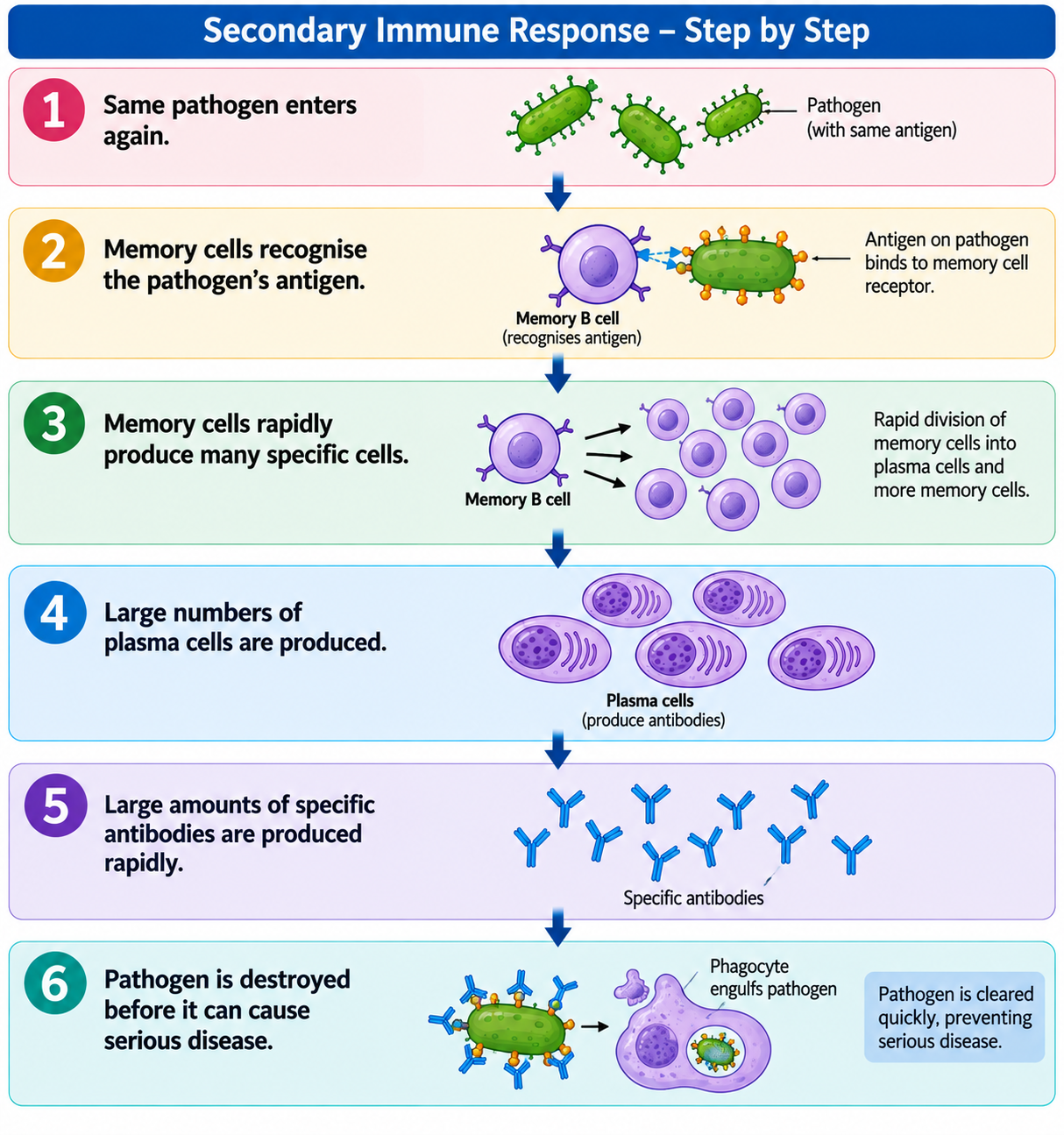
Not all activated B-lymphocytes become plasma cells. Some become memory cells.
Memory cells
Memory cells remain in the body after the pathogen has been eliminated. They retain a memory of the specific antigen of that pathogen.
If the same pathogen enters the body again, the memory cells recognise its antigen.
This produces a secondary immune response.
This is why a person who has developed immunity to a particular pathogen is usually able to respond much more quickly if exposed to the same pathogen again.
3.1.3. Primary Vs Secondary Immune Response
3.1.4. Role of Antibodies
Antibodies are proteins produced by lymphocytes. They bind to specific antigens on pathogens.
Because the antibody has a shape complementary to the antigen, it can bind specifically to it.
Antibody + specific antigen → antibody–antigen binding → pathogen is targeted for destruction
Antibodies can help destroy pathogens in several ways:
A. Making pathogens stick together
Antibodies can cause bacteria or other pathogens to stick together in groups. This makes it easier for phagocytes to find and engulf them.
B. Making pathogens easier for phagocytes to engulf
Antibodies attached to pathogens can make the pathogens easier for phagocytes to recognize and engulf. The phagocytes then digest and destroy them.
C. Stopping bacterial movement
Some bacteria have flagella that allow them to move. Antibodies can attach to the flagella and stop the bacteria from moving, making them easier for phagocytes to destroy.
D. Neutralizing toxins
Some bacteria produce toxins. Special antibodies called antitoxins can combine with these toxins and make them harmless.
E. Direct destruction
Some antibodies can kill bacteria by causing holes to form in their cell walls or membranes. Water then enters the cells by osmosis, causing them to burst.
3.1.5. Artificial Active Immunity – Vaccination
Vaccination is an artificial way of gaining active immunity.
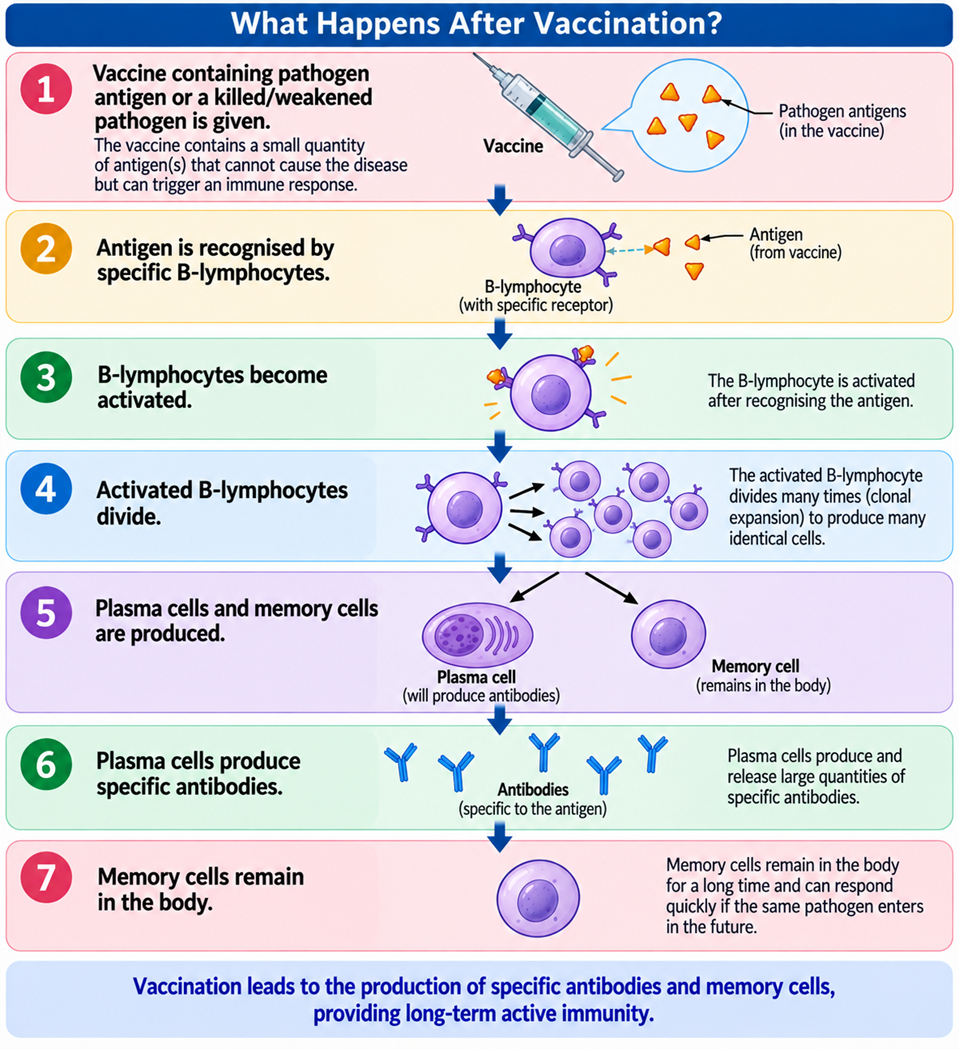
During vaccination, a person is given a small quantity of antigen or antigens from a pathogen, or a killed or weakened form of the pathogen. The material used in a vaccine is prepared so that it stimulates the natural immune response without causing the disease. This leads to the production of specific antibodies and memory cells, which provide long-term active immunity.
What happens after vaccination?
- Vaccine containing pathogen antigen or a killed / weakened pathogen is given
- Antigen is recognized by specific B-lymphocytes
- B-lymphocytes become activated
- B-lymphocytes divide
- Plasma cells + memory cells are produced
- Plasma cells produce specific antibodies
- Memory cells remain in the body
Therefore, vaccination produces active immunity because the person’s own immune system produces the antibodies and memory cells.
Why are memory cells important after vaccination?
The antibodies produced immediately after vaccination may eventually decrease in concentration, but memory cells remain in the body. If the vaccinated person is later exposed to the actual pathogen:
- Actual pathogen enters
- Memory cells recognize its antigen
- Rapid secondary immune response
- Large quantities of specific antibodies produced quickly
- Pathogen destroyed before it can cause serious disease
Thus, vaccination provides long-term protection against many diseases. It also helps to control the spread of transmissible diseases, because when a large proportion of a population is immune, pathogens have fewer susceptible hosts to infect and transmit to others.
3.2. Passive Immunity
Passive immunity occurs when a person receives antibodies made by another individual, rather than producing the antibodies themselves.
The important difference is:
Active immunity → the body produces its own antibodies.
Passive immunity → the body receives ready-made antibodies.
Passive immunity provides short-term protection because the antibodies eventually break down.
Types of passive immunity
| Type | How it is acquired | Example |
| Natural passive immunity | Antibodies are naturally transferred from another individual | Antibodies passing from mother to baby through the placenta and breast milk |
| Artificial passive immunity | Ready-made antibodies are given to a person | Injection of antibodies after exposure to a pathogen or toxin |
The attached resource explains that antibodies can cross the placenta and are also present in breast milk, providing temporary protection to the baby. It also describes antibody injections as artificial passive immunity.
Why is passive immunity short-term?
In passive immunity:
- the person’s own lymphocytes do not produce the antibodies;
- the antibodies are received from another individual;
- the antibodies eventually break down;
- memory cells are not produced.
Therefore, passive immunity does not normally provide the long-term protection associated with active immunity.
Active vs Passive Immunity
| Feature | Active immunity | Passive immunity |
| Source of antibodies | Produced by the person’s own lymphocytes | Received from another individual |
| Antibodies produced by body? | Yes | No |
| Memory cells produced? | Yes | No |
| Onset of protection | Relatively slow | Immediate/rapid |
| Duration | Usually long-term | Short-term |
| Natural form | Infection | Placenta/breast milk |
| Artificial form | Vaccination | Antibody injection |
The complete concept
ACTIVE IMMUNITY
Natural infection or vaccination
→ antigen enters/is introduced
→ B-lymphocytes activated
→ B-lymphocytes divide
→ plasma cells + memory cells
→ plasma cells produce antibodies
→ pathogen destroyed
→ memory cells remain
→ same pathogen enters again
→ rapid secondary immune response
PASSIVE IMMUNITY
Antibodies received from another individual
→ immediate protection
→ antibodies act against pathogen
→ antibodies eventually break down
→ no memory cells
→ protection is temporary.
The immune system normally protects the body by recognising foreign antigens on pathogens and producing an appropriate immune response. However, sometimes the immune system malfunctions and attacks the body’s own cells or tissues. Diseases that result from this type of abnormal immune response are called autoimmune diseases.
Autoimmune disease
An autoimmune disease occurs when the immune system mistakenly recognises cells or substances belonging to the person’s own body as foreign and mounts an immune response against them.
Normally:
Foreign antigen → immune response → pathogen attacked
In an autoimmune disease:
Body’s own antigen → incorrectly recognised as foreign → immune response → body’s own cells/tissues attacked
There are many autoimmune diseases. Examples include rheumatoid arthritis, multiple sclerosis and Type 1 diabetes..
Type 1 Diabetes and Autoimmune Disease
In Type 1 diabetes, the immune system attacks and destroys the cells of the pancreas that produce insulin. These cells are the β (beta) cells of the pancreatic islets.
In such cases insulin cannot be made by the pancreas and leads to an increased blood glucose level causing diabetes.
Insulin is a hormone that helps in lowering the blood glucose concentration.
What happens in Type 1 diabetes?
In Type 1 diabetes:
- Immune system malfunctions
- Immune cells attack pancreatic β-cells
- β-cells are progressively destroyed
- Less insulin is produced
- Blood glucose cannot be regulated normally
- Blood glucose concentration remains abnormally high
Why does lack of insulin cause high blood glucose?
Normally, insulin stimulates the liver and muscles to store glucose as glycogen.
When there is insufficient insulin:
- less glucose is stored as glycogen;
- glucose remains in the blood;
- the blood glucose concentration becomes abnormally high.
When blood glucose becomes sufficiently high, some glucose may pass into the urine.
Symptoms and Indicators of Type 1 Diabetes
The resource identifies several symptoms:
1. Weight loss
Because cells cannot use sufficient glucose normally, the body increasingly uses stored fat and protein as alternative energy sources, resulting in weight loss.
2. Increased thirst
The high concentration of glucose in the blood affects the water potential of the blood, causing increased loss of water and therefore increased thirst.
3. Tiredness
There is less glucose available for cells to use as an energy source, contributing to tiredness.
4. Glycosuria
Glycosuria is the presence of glucose in the urine.
When the blood glucose concentration becomes excessively high, the amount of glucose filtered into the kidney tubules increases. The kidneys are unable to reabsorb all of the filtered glucose, so some glucose remains in the urine.
The presence of glucose in the urine can therefore be used as an indicator of diabetes.
Treatment of Type 1 Diabetes
Because the pancreatic cells that produce insulin have been destroyed, a person with Type 1 diabetes requires regular injections of insulin.
The injected insulin replaces the insulin that the body can no longer produce adequately and helps control the concentration of glucose in the blood.
Cholera
Cholera is a transmissible disease caused by the bacterium Vibrio cholerae. It is mainly associated with contaminated drinking water and food, particularly where sanitation and sewage disposal are poor.
The key feature of cholera is severe watery diarrhoea, which can rapidly cause dehydration and loss of ions from the blood. The attached Unit 10 resource describes the cause, transmission and mechanism of cholera in this way.
1. Cause of cholera
Cholera is caused by the bacterium Vibrio cholerae.
The bacteria enter the body when a person drinks water or eats food contaminated with faecal matter containing the bacteria.
2. Mode of action of cholera
The serious effects of cholera are mainly caused by a toxin produced by the bacteria, rather than simply by the presence of the bacteria.
Step 1 – Bacteria reach the small intestine: After contaminated food or water is swallowed, the bacteria pass through the digestive system and reach the small intestine.
Step 2 – Cholera toxin is released: The bacteria produce a cholera toxin. The toxin affects cells lining the small intestine.
Step 3 – Chloride ions are secreted into the intestine: The toxin causes cells lining the small intestine to secrete chloride ions into the gut. This increases the concentration of dissolved ions in the contents of the small intestine.
Step 4 – Water moves into the intestine by osmosis: The increased concentration of ions lowers the water potential of the contents of the intestine. Water therefore moves from the blood into the small intestine by osmosis.
The sequence can be represented as:
Cholera toxin
↓
Increased secretion of chloride ions into small intestine
↓
Lower water potential inside the intestine
↓
Water moves from blood into intestine by osmosis
↓
Large volume of watery intestinal contents
↓
Severe diarrhoea
3. Effects of cholera
The major danger of cholera is the rapid loss of water and ions from the body.
Diarrhea: The movement of large amounts of water into the small intestine results in severe watery diarrhea.
Dehydration: Large quantities of water are lost from the body in the diarrheal fluid. This causes dehydration.
Loss of ions from the blood: The intestinal fluid also contains dissolved ions. Therefore, severe diarrhea results in the loss of ions from the blood as well as water.
The overall sequence is:
Cholera toxin
→ chloride ions secreted into small intestine
→ water enters intestine by osmosis
→ diarrhoea
→ loss of water + ions
→ dehydration and disturbance of ion balance
The resource identifies diarrhea, dehydration and loss of water and ions from the blood as the major effects of cholera.
4. Treatment of cholera
The most important treatment is to replace the water and ions lost through diarrhea.
Oral rehydration
For people who can drink, oral rehydration solution (ORS) is used. It contains appropriate amounts of water, salts and glucose to help replace the fluids and electrolytes lost through diarrhea.
For severe dehydration, particularly when the person cannot drink adequately, intravenous fluids may be required.
Antibiotics
Antibiotics may be used in selected cases of cholera, particularly severe cases, to reduce the duration and amount of bacterial shedding. However, they do not replace the need for rapid fluid and electrolyte replacement.
5. Prevention of cholera
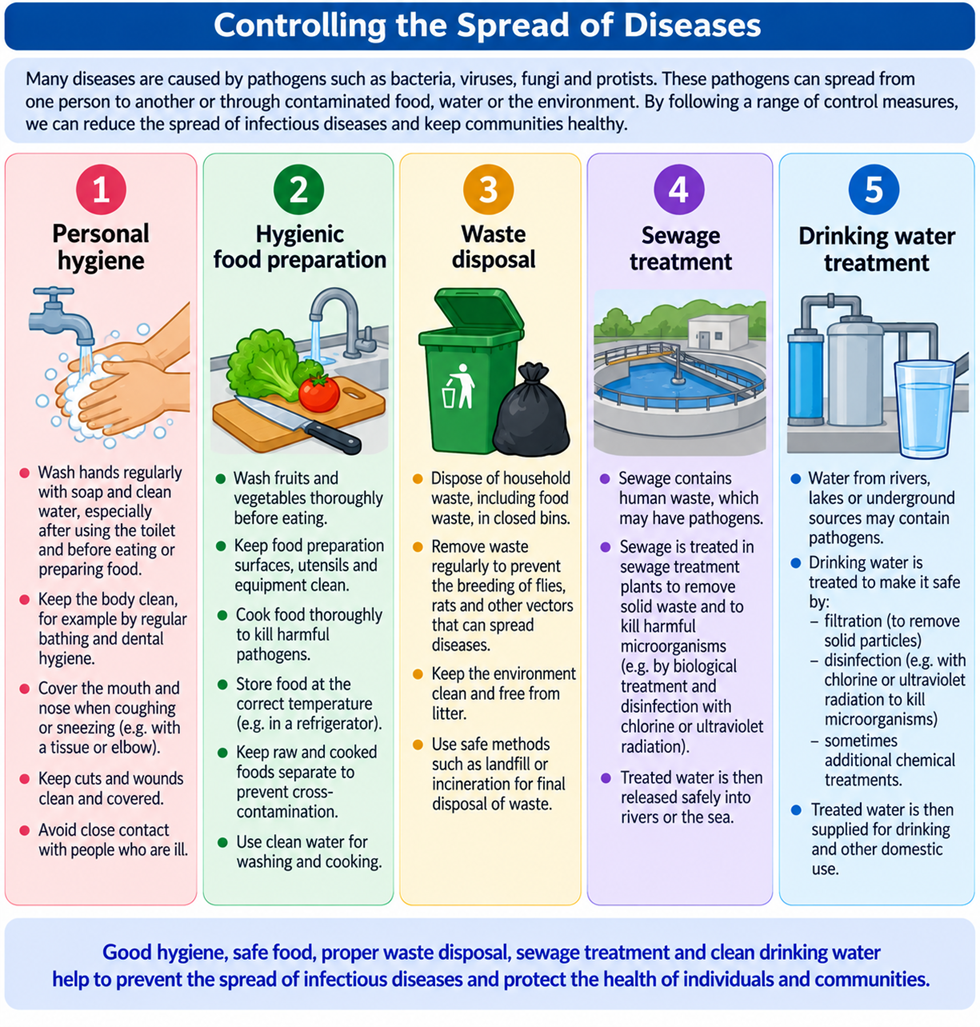
Because cholera is transmitted through contaminated food and water, prevention focuses mainly on breaking the fecal–oral route of transmission.
A. Proper sewage treatment
Human waste must be treated properly so that feces containing V. cholerae do not contaminate water supplies.
Proper sewage treatment → prevents fecal contamination → reduces transmission of cholera.
B. Safe drinking water
Water intended for drinking should be treated to remove or kill harmful microorganisms.
Methods include:
- filtration to remove particles and microorganisms;
- chlorination to kill harmful bacteria;
- boiling when safe treated water is unavailable.
The resource specifically describes chlorination as killing harmful bacteria that cause diseases including cholera and recommends boiling or chlorination of water when clean water is unavailable.
C. Good personal hygiene
Regular handwashing with soap and clean water, particularly:
- after using the toilet;
- after defecating;
- before handling or eating food.
This prevents pathogens from being transferred from feces to food, water or the mouth.
D. Hygienic food preparation
Food should be:
- prepared using clean hands and equipment;
- protected from flies and other sources of contamination;
- cooked thoroughly;
- kept appropriately stored;
- prepared using safe water.
These measures reduce the chance of V. cholerae entering food and subsequently being swallowed.
You have learned how diseases spread, how the body defends itself, and how immunity develops. Now test whether you can explain the “why” and “how”, not just remember the facts.
Try to answer each question in your own words before revealing the explanation.
1. Why is a transmissible disease able to spread from one person to another, while a non-transmissible disease cannot?
A transmissible disease is caused by a pathogen that can pass from one host to another. A non-transmissible disease is not caused by a pathogen and therefore cannot be transmitted between people.
2. Why does vaccination provide protection against a specific disease?
A vaccine introduces specific antigens that stimulate lymphocytes to produce complementary antibodies and memory cells. If the same pathogen enters the body later, the memory cells produce a rapid immune response.
3. Why does a person usually respond more quickly to a pathogen the second time they encounter it?
Memory cells remain in the body after the first infection. When the same pathogen enters again, these cells rapidly produce large numbers of cells that produce specific antibodies, resulting in a faster and stronger response.
4. Why does passive immunity provide only short-term protection?
In passive immunity, a person receives antibodies made by another individual. The person’s own immune system does not produce these antibodies or memory cells, so protection decreases as the antibodies are broken down.
5. Why can cholera cause severe dehydration?
Cholera toxin causes intestinal cells to secrete chloride ions into the small intestine. This lowers the water potential of the intestinal contents, so water moves from the blood into the intestine by osmosis. The resulting watery diarrhea causes rapid loss of water and ions.
6. Why is breastfeeding important for a newborn’s protection against disease?
Breast milk contains antibodies produced by the mother. These antibodies provide the baby with passive immunity and help protect it from some pathogens while its own immune system is still developing.